
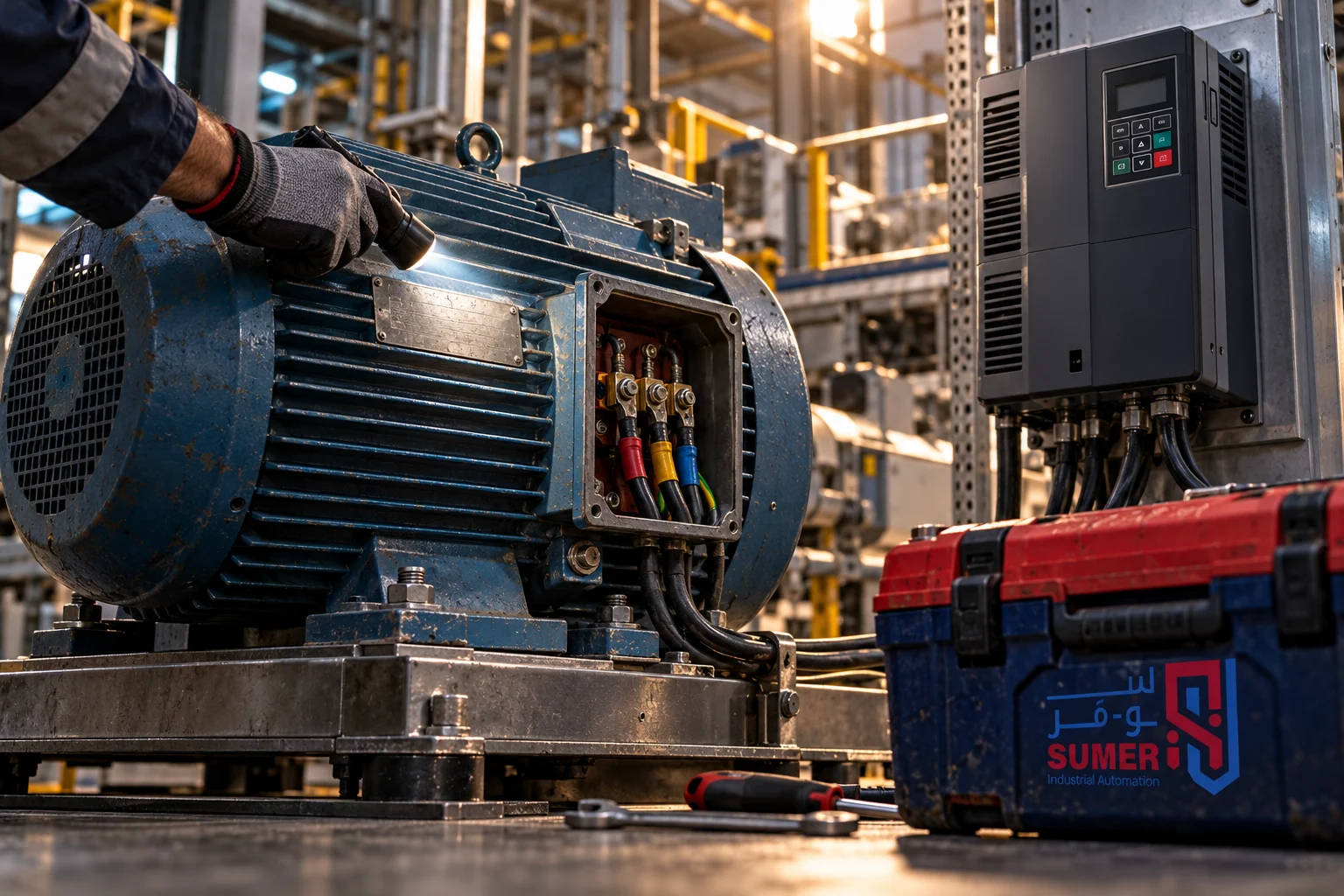
The price of a 220 to 380 conversion inverter cannot be determined solely by the motor's horsepower because the phrase "220 to 380" is used in the market to describe two completely different solutions: converting a single-phase 220V supply into a 220–230V three-phase output, or using a dedicated device that steps up the voltage to provide a 380–400V output. Most conventional 230V-class inverters do not automatically step up the voltage to 380V.
If the motor's nameplate reads 220/380V with a Δ/Y symbol, it might be operable from a 230V-class VFD with a three-phase output after wiring the motor in Delta and configuring the drive according to its data. However, if the motor is 380V only, or if its data is unclear, do not buy a standard 220V inverter assuming it will output 380V; you might need a purpose-built voltage-boosting solution, an appropriate power source, or a motor replacement.
This guide clarifies the possible scenarios, how to read a Nameplate, what determines the capacity and price of the device, and what data is required to get a proper recommendation. Send a picture of the motor's nameplate, the power source details, and the nature of the load to the SUMER team before purchasing, or browse the available Delta VFD inverters.
Does the Inverter Actually Convert 220 Volts to 380 Volts?
The answer depends on the device's design and is not a blanket "Yes." A standard inverter classified in the 230V class, receiving an input of 200–240V, typically provides a three-phase output within the 230V class. It converts the phase type and controls the frequency and voltage within the limits of its class, but it does not become a 380V source simply because its output is 3-Phase.
There are specialized devices in the market marketed as "220 to 380 conversion inverters," which include a voltage-boosting stage or an architecture designed to output 3-Phase 380V. However, you must verify the actual datasheet: input voltage and current, rated output voltage, continuous output power, load type, operating conditions, protection features, and the reliability and support of the manufacturer. An ad headline is not enough.
As for Delta inverters with a 220V single-phase input available within the 230V class (such as some EL-W and MS300 models), they are documented as 230V-class devices; they should not be presented to the customer as having a 380V output. They might be the correct solution for a 220Δ/380Y motor when wired in Delta, but they are not 220-to-380 voltage boosters.
The Difference Between Converting Single-Phase to Three-Phase and Voltage Boosting
Converting 220V Single-Phase to 220V Three-Phase
-
What happens: The VFD rectifies a 1-Phase input to the DC Bus and then creates a variable frequency 3-Phase output within the same voltage class.
-
Typical result: 3-Phase 220–230V for a compatible motor, with speed and acceleration control.
Boosting 220V to 380V Three-Phase
-
What happens: Requires a stage or a device specifically designed to step up the voltage before creating the 3-Phase output.
-
Typical result: 3-Phase 380–400V, only if the device's explicit specifications state so.
Operating a 220Δ/380Y Motor on a 230V Output
-
What happens: The possibility of wiring the motor coils in Delta is evaluated so that the rated voltage reaches each coil, according to the Nameplate and datasheet.
-
Typical result: The motor may operate at its rated capacities if the currents, load, and drive match, and after implementation by a specialist.
Therefore, having a 3-Phase output does not equal having 380V. This is the most crucial point before asking for the price of a 220 to 380 inverter: Do you actually need a voltage boost, or does the motor itself accept 220V when wired in Delta?
How to Read the Nameplate of a 220/380 Motor
The Nameplate is the starting point. Look for the voltage, the Δ/Y wiring configurations, the rated current for each configuration, the power in kW or HP, the frequency in Hz, the speed in RPM, and the Duty or Service Factor if present. Do not rely on verbal claims or simply counting the terminals in the junction box.
What does 220Δ/380Y mean? This symbol usually means the motor is wired in Delta when supplied with a line voltage of approximately 220–230V 3-Phase, and wired in Star when supplied with a line voltage of approximately 380–400V 3-Phase, according to factory data. In both cases, a voltage close to its design reaches each coil.
Therefore, when 220V Single-Phase is available, the solution might be a VFD explicitly rated for 230V single-phase input and 230V three-phase output, with the motor wired in Delta and the current, voltage, and frequency set from the Nameplate. The Delta current printed on the plate is typically higher than the Star current, and the drive's output must be able to handle it.
What about a 380Δ/660Y motor or a 380V-only motor? This motor is not equivalent to a 220Δ/380Y motor. Running it from a 220–230V output will normally not provide the rated flux and torque at the base frequency. Engineering solutions might include providing a 380V source, using a voltage-boosting VFD designed for the load, or replacing the motor with a compatible one. The decision requires reviewing current, torque, and duty cycle, not randomly changing connecting bridges.
What if the Nameplate is wiped out? Stop the purchasing decision. Gather the motor code, factory invoice, or catalog, and have a specialist measure the necessary data. Guessing the coil voltage or current can destroy the motor or the inverter and put workers at risk.
Scenarios for Operating a 3-Phase Motor When Only 220V is Available
-
Motor Data: 220Δ/380Y, six terminals, and suitable load.
-
Solution Considered: VFD with 220–230V 1-Phase input and 220–230V 3-Phase output, with the motor wired in Delta.
-
What to Verify: Delta current, drive capacity, load type, frequency, ventilation, and the model's explicit permission for single-phase input.
-
-
Motor Data: 380Δ/660Y or 380V only.
-
Solution Considered: A 380V source, a dedicated voltage-boosting solution, or a 230V-compatible motor.
-
What to Verify: Actual 380V output, starting and running currents, torque, reliability, and protection.
-
-
Motor Data: The motor is 220/380 but its terminals or coils do not allow field reconfiguration.
-
Solution Considered: Consult the factory or a motor rewinding technician before choosing a solution.
-
What to Verify: Internal terminal schematic; do not assume Delta wiring is possible just from the numbers.
-
-
Motor Data: Nameplate is unclear or the load is unknown.
-
Solution Considered: Inspect and document before purchasing.
-
What to Verify: Motor code, voltage, current, power, load type, and operating hours.
-
-
Motor Data: Multiple motors on a single machine.
-
Solution Considered: Independent drives or a centralized system specifically designed for this.
-
What to Verify: Sum of currents, control and protection for each motor, and avoiding reliance solely on the sum of horsepowers.
-
Changing Star/Delta configurations, wiring, and tuning the drive must be performed by a qualified electrician or engineer after disconnecting and isolating the power and following the motor and VFD manuals. This article helps you understand the selection decision, and is not a DIY wiring diagram.
How to Choose the Right Capacity and Current for the Inverter
Choosing by HP or kW alone can lead to undersizing the drive. Compare the inverter's rated output current to the motor's current in the configuration that will be used, then review the Duty Rating, overload capacity, and operating conditions.
1. Start with the Motor Current If the motor is 220Δ/380Y, use the 220V Delta current from the plate for your evaluation, not the 380V Star current. The appropriate VFD output current must be equal to or greater, depending on manufacturer requirements and load characteristics. Do not estimate the conversion if the plate provides both values.
2. Choose a Device Rated for Single-Phase Input If the source is 220V Single-Phase, use a model whose specifications explicitly state it accepts this input. Some series offer single-phase models up to specific capacities. Do not connect a single-phase input to a VFD designed exclusively for three-phase unless the manufacturer explicitly permits it and defines selection and derating rules; this is because the rectifier and DC Bus currents will behave differently.
3. Check the Power Source Capacity Running a 3-phase motor via a VFD from a single-phase source does not reduce the power required from the grid. The input current can be substantial, so you must review the circuit breaker, cabling, voltage drop, available capacity, and source quality, considering harmonics and protection requirements per the design and local code.
4. Review Temperature, Altitude, and Mounting Method High temperatures, high altitudes, or higher Carrier frequencies may necessitate derating the available current according to the model's manual. The drive also needs a panel, proper ventilation, and adequate mounting clearances. Do not use an IP20-rated device outside of an enclosure suitable for the environment.
5. Leave a Margin Based on the Application, Not Guesswork "Upsizing by one notch" is not a universal fix for every application. The margin is determined by the load, acceleration, number of starts, Overload Profile, and site conditions. The application might require a braking resistor, a Reactor, a Filter, or an additional control device; all of which affect the final price.
How Does the Load Type Affect Inverter Selection?
A 2.2kW motor on a fan is not the same as a 2.2kW motor on a mixer or a hoist. You must know the torque curve and duty cycle:
-
Fans and Centrifugal Pumps: Usually Variable Torque. The operating point must be considered, and speeds should not be reduced to a point that prevents motor cooling or degrades process performance.
-
Conveyors and General Machinery: May be Constant Torque, requiring adequate torque during acceleration and at low speeds.
-
Mixers, Compressors, and some Machine Tools: Starting or load changes might be heavier, requiring an Overload study and selecting an appropriate Control Mode.
-
Hoists and Regenerative Loads: Require specialized design for braking and safety; they cannot be treated as a simple fan application.
Send the nature of the machine, not just the motor name. This information could change the series, size, and accessories, thereby changing the price of a 220 to 380 conversion inverter or the most appropriate alternative.
What Factors Determine the Price of a 220 to 380 Conversion Inverter?
We do not provide a fixed number because device prices and availability fluctuate, and a 220V Input / 230V Output product differs fundamentally from a device that boosts voltage to 380V. The actual price is determined by:
-
Motor Power and Current: Higher power and current increase the size and cost of the drive and panel components.
-
Input and Output Type: A 230V single-to-three phase device is not the same as a 230V to 400V booster.
-
Load Nature: Heavy Duty, Overload demands, and low-speed torque may require a different series or size.
-
Brand and Series: Capabilities, reliability, communications, and protection differ between economical and advanced series.
-
Control Functions: The need for Vector Control, a PLC, an HMI, or a communication protocol affects the solution.
-
Accessories: Circuit breakers, fuses, contactors, control inputs, Reactors, Filters, braking resistors, enclosures, and ventilation based on the engineering study.
-
Installation and Programming: Setup, commissioning, testing rotational direction, acceleration, protection, and training are not just the cost of the box.
-
Warranty, Support, and Stock: A reliable source, technical support, and replacement availability reduce machine downtime risks.
If you are generally comparing Delta series prices, review the Delta Inverter Prices Guide and the factors affecting them. This page, however, focuses on the voltage class decision when a 220V source is present.
What Data is Required to Get an Accurate Price?
Send the following data in a single message to minimize questions and avoid an inappropriate recommendation:
-
A clear, full picture of the motor's Nameplate.
-
Power (kW or HP), voltage, Δ and Y currents, frequency, and speed.
-
A picture of the motor's terminal box and wiring diagram if visible, without dismantling or modifying anything while powered.
-
The available source: 220V Single-Phase or Three-Phase? The measured voltage and breaker capacity.
-
Machine and load type: Fan, pump, conveyor, mixer, compressor, hoist, or other.
-
Does the motor run at full load? What are the required speed and control ranges?
-
Number of starts/stops, acceleration time, and daily operating hours.
-
Required control method: Keypad, external buttons, PLC, or HMI.
-
Installation location, temperature, dust, humidity, and available space.
-
Is the requirement for the device only, or a complete panel, programming, and on-site commissioning?
Without this data, any price for a "220 to 380 conversion inverter" will just be a hypothetical device price, not a quote for a solution that guarantees your required motor operation.
Delta VFD Series That Can Be Evaluated
SUMER offers several categories of Delta VFD inverters. Selection is not made by the series name alone; the model code, voltage class, input, and current must be specified.
Delta VFD-EL-W The Delta VFD ELW series includes 230V single-phase input models for small capacities, alongside models in other categories. Delta's official documentation indicates that the code "21" in EL-W stands for 230V 1 Phase, and that 230V models have an output voltage within the 230V class, not 380V. For example, SUMER lists the Delta VFD022EL21W-1 at 2.2kW / 3HP, with 200–240V single-phase input and 230V three-phase output according to its product page. This is an example for operating a compatible 230V 3-phase motor, not a voltage booster to 380V.
Delta MS300 The Delta MS300 series includes 230V single-phase input models up to specific capacities, alongside 230V and 460V three-phase input models. The official MS300 manual shows that the single-phase 230V group has a specific supply range and output currents for each model. The full code must be read; the name "MS300" alone does not define the voltage or the number of phases.
Delta VFD-EL-A and Other Series Delta VFD ELA, MH300, and C2000 can be evaluated for various applications, but do not assume every series offers a single-phase input or the specific output voltage required. Refer to the Datasheet for the actual model, and choose the series based on load, power, communications, and environment.
If a true 380V output from a 220V source is required, the solution's specifications must explicitly state this capability. Delta's 230V class models are not intended to be used as 220 to 380 Boost VFDs.
Common Mistakes Before Buying a 220 to 380 Inverter
-
Confusing Phase and Voltage: 220V 3-Phase does not mean 380V 3-Phase.
-
Buying by HP Only: Ignoring current and load type can cause the drive to trip on Overcurrent or overheat.
-
Using Star Current in Calculations: When operating a
220Δ/380Ymotor on Delta, you must review the Delta current. -
Changing Star/Delta Without the Nameplate: Moving bridges is not an experiment; you must know the voltage of each coil and the factory schematic.
-
Connecting 1-Phase to a 3-Phase Drive Randomly: This can overload the rectifiers and the DC Bus beyond their design limits.
-
Expecting Full Torque from a 380V Motor on a 220V Output: Dropping the voltage without analysis alters the V/F curve and performance, and may spike the current or prevent the load from moving.
-
Buying an Unknown Boost VFD: A "220 to 380" advertisement does not guarantee continuous output capacity or proper protection and reliability.
-
Neglecting Source Capacity: An undersized breaker, inadequate cabling, or voltage drop can prevent operation even if the drive is sized correctly.
-
Copying Parameters from a Video: Settings vary between series, models, and motors.
-
Ignoring Cooling Speed: Running the motor at a very low speed for extended periods can diminish the cooling capability of its internal fan.
Requirements for Safe Installation and Commissioning
The VFD contains a DC Bus that may hold dangerous voltage after the power source is disconnected. Installation, measurement, and maintenance must be performed by a qualified person, after isolating power, verifying that indicators are off, waiting the specified time in the model manual, and measuring for the absence of voltage using approved methods.
-
Use a circuit breaker, cable, grounding, and protection appropriate for the input current, manufacturer requirements, and local codes.
-
Install the drive in an environment with clearances and ventilation suitable for its IP rating and ambient temperature.
-
Do NOT connect the power source to the motor output terminals (U/V/W).
-
Do NOT install power factor correction capacitors on the VFD output unless the engineering solution specifies compatible components.
-
Configure the basic motor parameters, frequency limits, acceleration, and protection according to the Nameplate and application.
-
Test without a load or with a controlled load under a safe commissioning plan before full production.
For a general overview of terminals and inspection stages, read How to Connect an Inverter to a Motor. If the display works but there is no power to the motor, review the Guide: Inverter Not Outputting Power before assuming the device is damaged.
Request a Suitable Inverter Recommendation from SUMER
Instead of buying a device labeled "220 to 380" without knowing what it actually outputs, send your motor, load, and source data to SUMER. The initial evaluation will determine which scenario applies:
-
A 230V-class VFD to run a
220Δ/380Ymotor wired in Delta. -
A device or system that genuinely provides 380V for a motor that strictly requires it.
-
Replacing the motor with a compatible option if it's simpler and more reliable.
-
A complete control panel including protection, operation, and a PLC or HMI if necessary.
Send a picture of the Nameplate to SUMER and request a quote. Mention that the source is 220V, specify if it is 1-Phase or 3-Phase, and describe the machine type and operating hours. With this data, you will receive an actionable recommendation, not just a price for a device that might not fit the motor.
Before comparing the price of a 220 to 380 conversion inverter, determine whether you need a true voltage boost or simply a 220V single-phase to 230V three-phase conversion for a 220Δ/380Y motor. Read the Nameplate, rely on the Delta current and load type, and select a device explicitly rated for single-phase input if that is your source. Do not buy a 230V-class VFD expecting it to output 380V, and do not change Star/Delta wiring without a clear schematic and qualified execution.
To get an accurate recommendation and price, send a picture of the motor plate along with source and load data to SUMER. They will determine whether the solution is a 230V-class VFD, a dedicated voltage booster, or a change in the motor or power supply.